


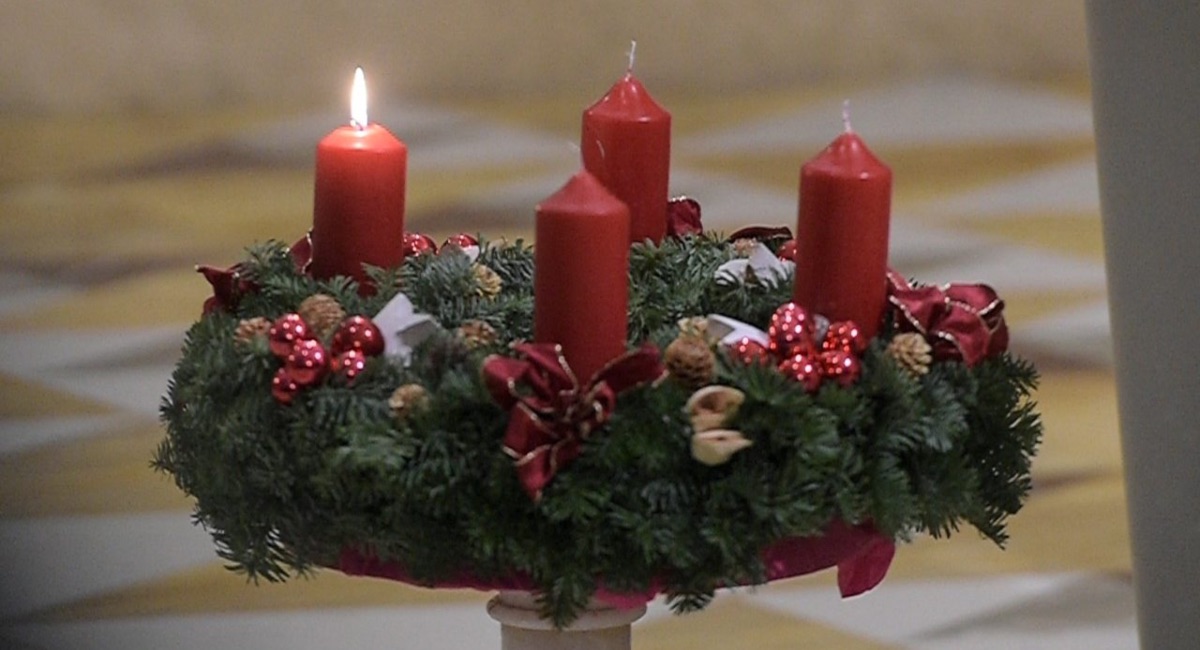

The Christian tradition began with a wooden wagon wheel in 19th-century Hamburg. Today, four candles mark the Sundays before Christmas, each carrying a message of hope, peace, joy or love.
As Christmas approaches, Advent wreaths return to homes and churches. Each Sunday of Advent, one more candle is lit, so that by the fourth Sunday all four are burning. Now observed around the world, the custom began in a home for children in 19th-century Germany and grew into a Christian tradition of waiting and hope.

How a wagon wheel became the first Advent wreath
The Advent wreath dates to 1839, when Johann Hinrich Wichern, a German Protestant pastor, came up with a way to answer a question the children in his care kept asking: How many days until Christmas? Wichern had founded the Rauhes Haus in Hamburg to shelter and educate children living in poverty, including orphans.

To help the children see how much time remained, Wichern fitted a large wooden wagon wheel with small red candles for the days between Sundays and four larger white candles for the Sundays of Advent. Each evening during prayers, the children lit another candle. As Christmas drew closer, the wheel grew brighter.

In the decades that followed, the wreath was adapted to fit more easily into homes. It was reduced to the four Sunday candles and decorated with evergreen branches, a symbol of eternal life.
What the four Advent candles represent
Over time, Christian communities gave the candles names and spiritual meanings. In one widely used tradition, they represent hope, peace, joy and love.
First Sunday — The Prophet’s Candle, or the Candle of Hope. It recalls the Old Testament prophets, especially Isaiah, whose words Christians understand as foretelling the coming of the Messiah centuries before the birth of Jesus.
Second Sunday — The Bethlehem Candle, or the Candle of Peace. It recalls Bethlehem, the small town in Judea where Jesus was born, and calls for reconciliation and peace.
Third Sunday — The Shepherds’ Candle, or the Candle of Joy. It recalls the shepherds who heard the angel announce Jesus’ birth and hurried to see him. In the Catholic liturgy, the third Sunday of Advent is known as Gaudete Sunday, when priests may wear rose-colored vestments in place of violet. The third candle is often pink.
Fourth Sunday — The Angels’ Candle, or the Candle of Love. It recalls the angels who sang glory to God on the night Jesus was born and represents the love for all humanity expressed in the birth of the Savior.
Light in the darkest weeks of the year
Advent falls during some of the darkest weeks of the year in the Northern Hemisphere, as daylight dwindles toward the winter solstice. The wreath grows brighter as the days grow shorter. With another candle lit each Sunday, Christians mark the approach of Christmas with a visible reminder of hope.
SEO title
Advent Wreath: History and Meaning of the Four Candles
Meta description
Discover how the Advent wreath began in 19th-century Germany and why its four candles symbolize hope, peace, joy and love in the weeks before Christmas.
Focus keyphrase
Advent wreath
Slug
advent-wreath-history-four-candles-meaning
Nota redazionale. Il testo di partenza indica 24 candele, ma ne elenca 19 rosse e quattro bianche, per un totale di 23. Nella traduzione ho mantenuto la distinzione tra le candele rosse e le quattro bianche, omettendo il totale


